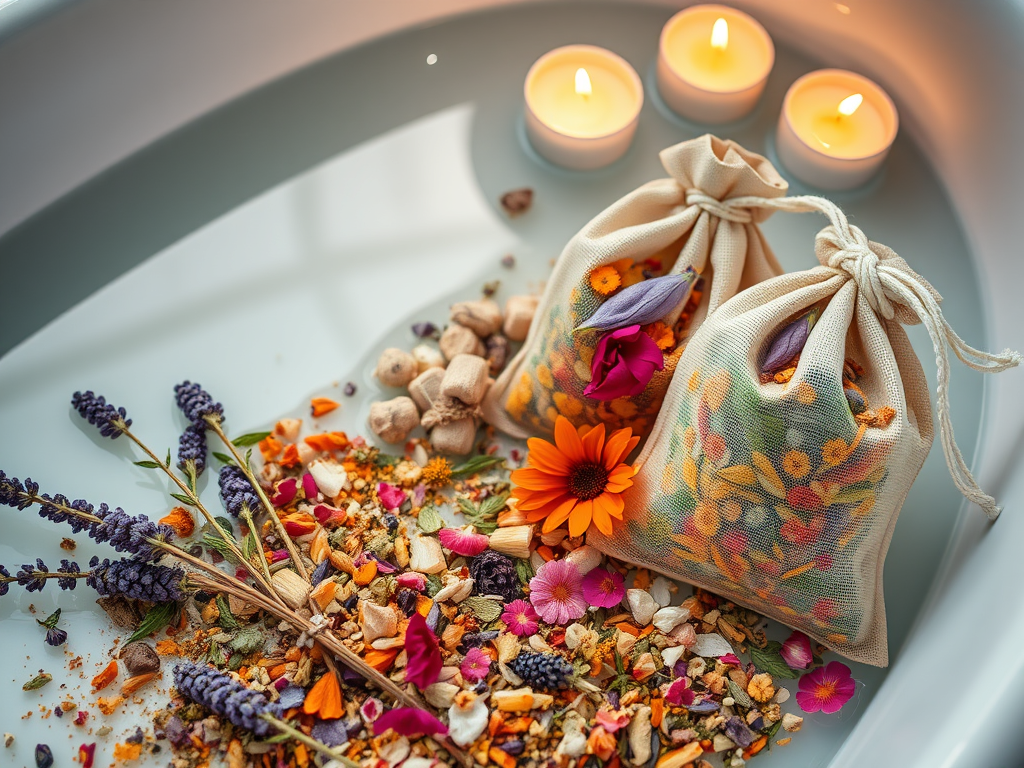
In a world that constantly asks us to do more, move faster, and stay connected, creating small moments of rest is essential. One of the simplest and most affordable ways to slow down is through a warm bath infused with bath tea. Whether you’re craving calm, muscle relief, better sleep, or simply a cozy ritual at the end of the day, bath teas transform an ordinary bath into a deeply restorative experience.
This guide will walk you through exactly what bath teas are, why they’re so beneficial, how to make them yourself, how to customize them for different needs, and when it makes sense to buy ready‑made bath teas instead. If you love DIY, self‑care, natural living, or giftable wellness ideas, this post is for you.

What Are Bath Teas?
Bath teas are herbal blends designed to steep in warm bath water, much like a cup of tea steeps in hot water. Instead of drinking them, you soak in them—allowing the skin to absorb minerals, botanicals, and aromatherapeutic benefits.
They typically include a combination of: (click the link for the items that I recommend)
- Dried herbs or flowers (lavender, chamomile, rose, calendula)
- Salts (Epsom salt, sea salt, Himalayan salt)
- Oats or milk powders (for soothing sensitive skin)
- Optional essential oils (for scent and mood support)
Bath teas are usually contained in muslin bags, reusable tea sachets, or cotton drawstring bags, which keep herbs out of your tub and make cleanup effortless.
Benefits of Using Bath Teas
Bath teas go far beyond smelling nice. When used consistently, they can support both physical and mental wellness.
Stress Relief & Nervous System Support
Warm water relaxes the body, while herbs like lavender, chamomile, lemon balm, and rose help calm the nervous system. This makes bath teas especially helpful for evening routines, anxious seasons, or emotional burnout.
Muscle Relaxation & Pain Relief
Epsom salt (magnesium sulfate) is a staple in bath teas because it may help relieve sore muscles, tension, and post‑workout fatigue. Adding herbs like rosemary or eucalyptus can amplify this effect.
Skin‑Soothing Properties
Oats, calendula, chamomile, and milk powders are known for their skin‑calming benefits. Bath teas can help soothe dry skin, irritation, and seasonal itchiness—without harsh ingredients.
Rest
Perhaps the most underrated benefit: bath teas create intentional space for rest. Lighting a candle, setting aside your phone, and soaking with purpose helps retrain your body to rest without guilt.
DIY Bath Teas vs. Store‑Bought: Which Is Better?
The truth? Both have a place.
DIY Bath Teas Are Perfect If You:
- Love hands‑on creative projects
- Want full control over ingredients
- Enjoy customizing blends for moods or seasons
- Like budget‑friendly self‑care
- Want a thoughtful handmade gift idea
Store‑Bought Bath Teas Are Ideal If You:
- Want convenience and consistency
- Prefer professionally balanced blends
- Need quick gifts that still feel special
- Are new to herbs and don’t want to source ingredients
Many people use both—making DIY blends for everyday use and keeping a few beautiful store‑bought options on hand for gifting or special occasions.
How to Make DIY Bath Teas (Step‑by‑Step)
What You’ll Need
- Dried herbs or flowers of your choice
- Salts (Epsom, sea salt, or a blend)
- Optional oats, milk powder, or baking soda
- Reusable muslin bath tea bags or large tea filters
- A mixing bowl and spoon
Basic Bath Tea Formula
- 2 cups Epsom salt or sea salt
- ½–1 cup dried herbs/flowers
- 1–2 tablespoons optional add‑ins (oats, milk powder)
- 5–10 drops essential oil (optional)
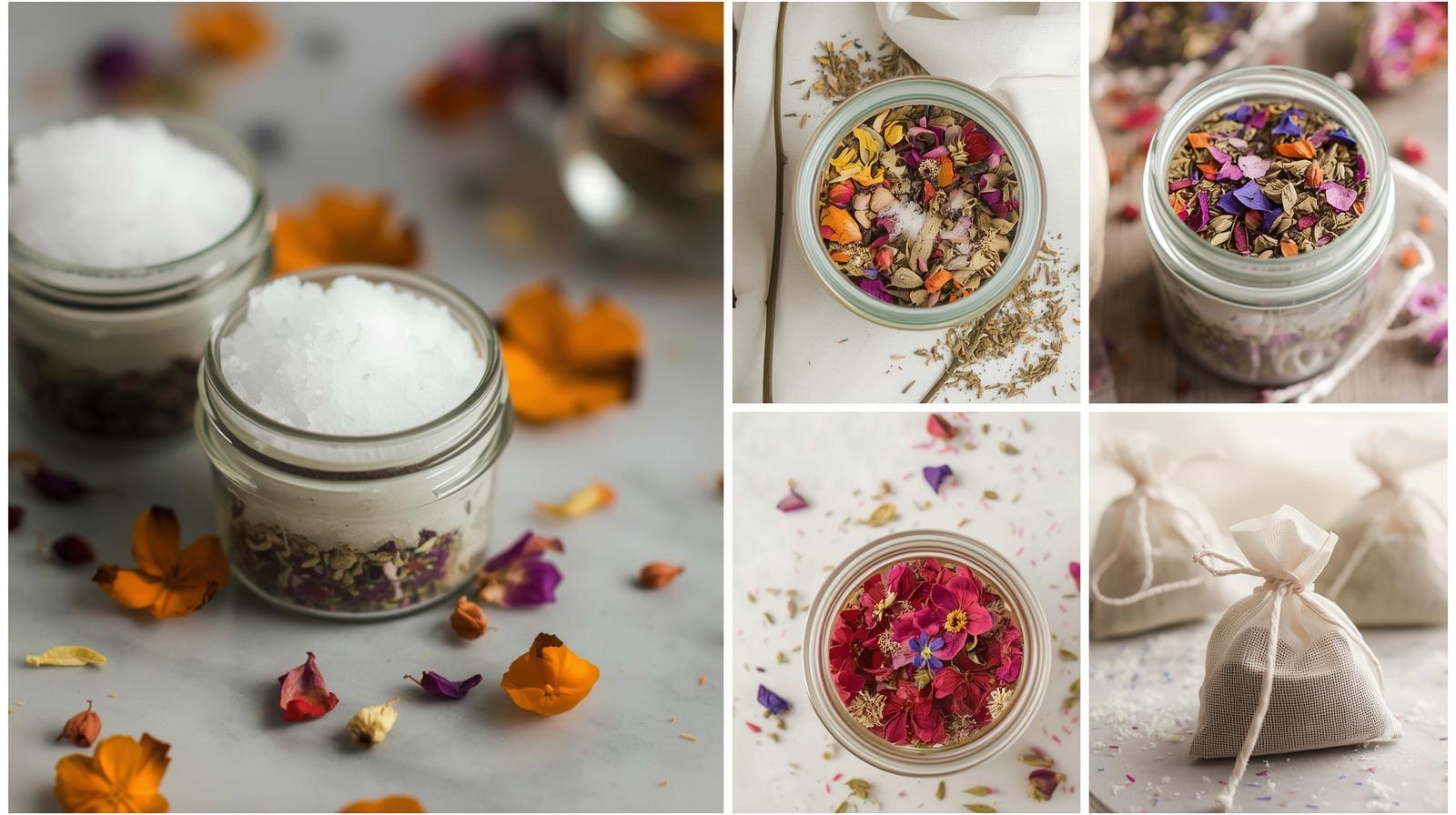
Mix all dry ingredients first, then add essential oils last and stir thoroughly. Spoon mixture into your bath tea bag and tie securely.
DIY Bath Tea Recipes for Every Mood
Relax & Unwind Bath Tea
Best for: stress relief, bedtime routines
- 2 cups Epsom salt
- ½ cup dried lavender
- ½ cup chamomile
- 5 drops lavender essential oil
Detox & Refresh Bath Tea
Best for: fatigue, mental fog
- 2 cups sea salt
- 2 tablespoons dried rosemary
- 2 tablespoons dried mint
- Zest of one lemon (dried)
Skin‑Soothing Oat Bath Tea
Best for: sensitive or dry skin
- 1 cup finely ground oats
- 1 cup powdered milk or coconut milk powder
- ½ cup calendula petals
Cozy Comfort Bath Tea
Best for: emotional support, cozy evenings
- 2 cups Himalayan pink salt
- ½ cup dried rose petals
- ½ cup lavender buds
Essential Tools for Bath Tea Making
To make bath teas easy and mess‑free, keep these on hand:
- Reusable muslin bath tea bags
- Glass jars for storage
- Labels for gifting
- Airtight containers to preserve freshness
Reusable bags are especially important—they keep herbs out of your drain and allow water to circulate freely through the blend.
The Best Ready‑Made Bath Teas to Buy
If you’d rather skip the prep, there are many beautiful bath tea options available online. Look for products that:
- Use organic or responsibly sourced herbs
- Avoid artificial fragrance
- Come in compostable or reusable packaging
Ready‑made bath teas also make excellent self‑care gifts, stocking stuffers, teacher gifts, and wellness baskets.
How to Use a Bath Tea for Maximum Benefit
- Fill your tub with warm (not scalding) water
- Drop in your bath tea sachet
- Let it steep for 3–5 minutes
- Soak for at least 20 minutes
- Rinse lightly or pat dry to keep skin benefits
For extra relaxation, pair your soak with low lighting, calming music, or a devotional, book, or journal.
My Personal Favorite: Our Family Detox Bath
Our family’s detox bath is hands-down my personal favorite.
This is the bath we reach for when sniffles start creeping in, when bodies feel run down, or when we just need a reset. It’s become such a normal rhythm in our home that my three boys will often take the initiative to make their own detox baths as soon as they start feeling a little under the weather.
Our Go-To Detox Bath Recipe
This isn’t fancy or complicated, but it’s incredibly effective:
We add everything directly to warm bath water and let it dissolve before soaking. The combination helps support detoxification, soothe tired muscles, and promote relaxation—especially when paired with lavender’s calming properties.
What I love most is that this bath has become more than a remedy; it’s a signal to slow down and listen to our bodies. Instead of pushing through, we rest. Instead of ignoring early symptoms, we respond gently.
It’s also a beautiful reminder that wellness doesn’t have to be complicated or expensive. Sometimes it looks like warm water, a familiar routine, and kids who know how to care for themselves early on.
Rest Can Be Simple
You don’t need a luxury spa day to care for yourself well. Sometimes all it takes is warm water, gentle herbs, and permission to rest. Whether you’re making your own bath teas or purchasing a thoughtfully crafted blend, these small rituals remind us that slowing down is not wasted time, it’s essential.
Affiliate disclosure: This post contains affiliate links.
 Christia DeShields
Leave a comment